Nitro Nation: Car Racing Game
- 4.4
- Rating
- 50.00M
- Installs
- Free
- Price

 Analysis by App-foxy
I spent time with Nitro Nation: Car Racing Game as a mobile racing game, and my first impression was clear: this is built around short, intense bursts rather than long driving sessions. The focus is on tuned cars, drag launches, drifting events, and the small decisions that separate a clean run from a disappointing one. It is free to download, rated for Everyone, and developed by Supercharge Mobile, so it is easy to try without committing money upfront.
That accessibility explains part of its broad reach. The game has an average rating of 4.4 from around 1.6 million ratings, with more than 50 million installs. Those figures do not automatically make it the right racing game for everyone, but they do suggest that its compact races and customization-led approach have found a large audience. I can see why: it gives you something meaningful to do even when you only have a few minutes.
How the races feel when you are actually playing
The most important thing to understand is that this is not trying to be a full open-road simulator. I would not choose it when I want to explore a large map, follow traffic, or simply cruise while listening to music. Its appeal comes from controlled events where acceleration, timing, and the behavior of a built car matter more than navigating a huge environment.
You May Also Like

 Blood Strike: 2.5 Anniversary
Blood Strike’s Loadouts Turn Every Drop Into a Tactical Gamble
A close look at Blood Strike’s custom loadouts: how fast access to signature weapons reshapes its battle royale rhythm, rewards preparation, and narrows the gap between fights.

 Pandora - Music & Podcasts
Pandora’s Music Is Easy to Start, but Harder to Recover
Pandora’s strength is its low-effort path from a seed to a station. Its weak spot is how much confidence it asks you to place in connection, setup, and quiet recovery.

 8 Ball Pool
 Is Built on Rivalries, Rematches, and Routine
A close look at the rivalries, rematches, shared routines, and unanswered safety questions that turn a quick pool match into a persistent mobile community.

 Samsung Music
’s Quiet Strength Is Playing What You Already Own
Its reach comes less from spectacle than from dependable access to a personal library. That simplicity is both the app’s strongest retention engine and its ceiling.

 AccuWeather: Weather Radar
AccuWeather Review: A Quick, Clear Forecast for Everyday Decisions
For everyday plans, the best forecast is the one you can understand quickly. AccuWeather makes rain timing, radar, and local conditions easy to act on, with a few trade-offs.

 Hill Climb Racing
Why Hill Climb Racing Still Turns Crashes Into One More Run
A tiny car, a bumpy hill and one more upgrade: Hill Climb Racing keeps resurfacing because its simple chaos makes every near-miss feel personal.
More From Our News Desk



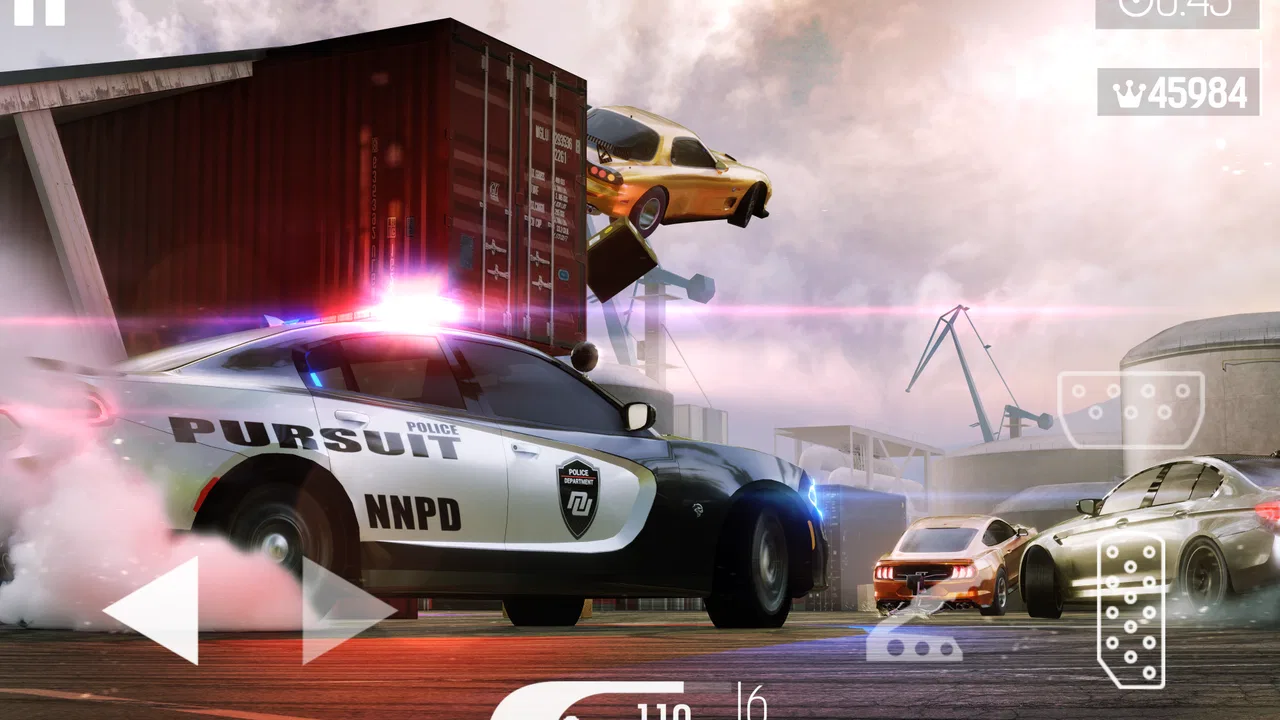
Drag racing gives the game its sharpest identity. A race can feel simple at first because the track is short and the objective is obvious, but that simplicity makes mistakes easy to notice. A launch that feels slightly late, a shift that does not land cleanly, or a car setup that is not suited to the event can change the result quickly. I like that the game makes each attempt feel focused rather than diluted by a long list of unrelated tasks.
Drifting adds a different kind of tension. Instead of concentrating only on getting to the finish line as fast as possible, I have to think about control, rhythm, and how aggressively to carry a slide. That gives the racing category some welcome variety. If you enjoy both precise straight-line runs and more expressive corner work, the combination is more satisfying than a game that offers only one style of event.
The garage is where the experience becomes more personal. Building a unique race car is not just a visual exercise; it gives me a reason to compare choices and think about what kind of driver I want to be. I prefer games where the vehicle feels like something I am gradually shaping, rather than a disposable selection from a menu. Here, the garage encourages that attachment, even though the exact value of each upgrade depends on how the wider progression is presented during play.
A useful habit is to treat every event as a test of the current setup instead of immediately assuming that the fastest-looking car is the best choice. A car that performs well in a drag event may not give the same satisfaction in a drift-focused challenge. I found it more rewarding to pause before spending resources, consider the type of race ahead, and improve the vehicle that fits my current goal. That approach also reduces the feeling of constantly chasing a new car.
Why short sessions work well
Nitro Nation fits naturally into everyday gaps. If I am waiting for an appointment or have a few minutes before leaving home, I can play a small number of races without needing to remember a complicated story or rebuild a large open-world route. The quick structure makes it approachable for casual players, while the tuning and event differences give more committed players a reason to return.
That same design can become repetitive if you need substantial variety in every session. The game keeps returning to the core pleasures of racing, upgrading, and competing. I enjoy that loop in moderation, but someone looking for a campaign with constant new environments may eventually find the structure narrow. Its strength is concentration, not endless reinvention.
Progression, spending, and the pressure to keep improving
The game is free, but it includes in-app purchases ranging from $0.99 to $199.99 per item. That is the most important financial context for a new player. I can begin without paying, yet the presence of a very wide purchase range means I would approach the garage and progression with a budget in mind rather than treating every offer as harmless.
I recommend deciding early what “progress” means to you. If the goal is simply to enjoy races and gradually improve a favorite car, patience matters more than chasing every available advantage. If the goal is to reach the strongest possible setup quickly, the purchase structure may create pressure, especially when a new upgrade or vehicle appears to promise a faster route forward. I would not spend until I had played enough to understand whether the current bottleneck was genuinely reducing my enjoyment.
One practical way to limit pressure is to choose a personal project car. Instead of trying to improve everything at once, I would focus on one vehicle, learn how it behaves, and only invest when an upgrade solves a problem I have actually noticed. This makes each improvement easier to judge. It also prevents the garage from becoming a list of tempting purchases that I cannot meaningfully evaluate.
The free entry point is valuable, but “free” does not mean the complete experience has no friction. The purchase range shows that the game is designed to support spending at very different levels. I can say that clearly without assuming how often offers appear, whether a particular item is necessary, or how much competitive advantage any purchase provides. Those details depend on the live experience and should not be treated as facts without checking them directly in the current build.
The current version is 8.3.0, and the game runs on Android 7.0 or later. That makes checking device compatibility worthwhile before installing, particularly if you use an older phone or tablet. On a supported device, I would still keep an eye on how comfortable the controls feel during longer sessions. Racing games can be technically playable while becoming tiring if the screen, touch response, or visual scale does not suit the player.
Where the pressure can appear
Progression pressure usually arrives when a player stops treating races as individual challenges and starts treating them as a constant comparison with the next unlock. I noticed that this mindset can make a perfectly enjoyable run feel inadequate simply because another car or improvement is visible. The best defense is to set a stopping point: play a few events, improve one area, and leave before the desire for the next purchase takes over.
This is also why I would avoid recommending the game to someone who dislikes any form of optional spending in a free-to-play title. Even without claiming that payment is required, the listed purchase range is enough to tell me that monetization is part of the product’s design. Players who want a one-time purchase with a clearly defined cost may feel more comfortable with a premium racing game instead.
How fair does competition feel?
Fairness is harder to judge from the basic store facts alone, so I separate what I experienced from what I cannot responsibly claim. I can evaluate the feel of the races, the clarity of my own mistakes, and whether improving my driving gives me a satisfying sense of control. I cannot turn the existence of purchases into a definite claim that competition is unfair, nor can I promise that every competitive situation is purely skill-based.
For me, the strongest fairness signal is whether I understand why I lost. Drag events are satisfying when the result seems connected to timing, preparation, and the car I chose. Drift events feel fairer when the game gives me a consistent relationship between input and outcome. When I can identify a specific mistake and adjust on the next attempt, losing becomes useful rather than irritating.
That does not eliminate the possibility of progression differences between players. A person who spends may reach certain improvements sooner, while a patient player may take longer to achieve a comparable setup. The verified purchase information confirms that paid items exist, but it does not establish exactly how they affect competition, matchmaking, or event access. I would therefore describe the game as suitable for players who can tolerate some uncertainty around competitive balance, not as a guaranteed level playing field.
If fairness is your top priority, I would play the free portion first and observe your own reactions. Do you feel that better driving changes outcomes? Do you understand the role of your car’s setup? Do you enjoy competing without feeling pushed toward a purchase? Those answers are more useful than assuming that every free-to-play racer handles competition in the same way.
Another sensible approach is to separate personal goals from leaderboard-style goals. I can enjoy learning a launch, improving a drift, or building a car that suits my taste without needing to prove that I have the strongest possible garage. That makes the experience less vulnerable to spending pressure. Players who mainly want strict, equal equipment should look for a racing title whose competitive rules explicitly guarantee that kind of balance.
Who will enjoy it most?
I think the best audience is someone who likes cars as projects. You do not need to be an expert mechanic, but you should enjoy comparing setups, repeating a race to improve, and seeing a vehicle become more suited to a particular event. The game also works for people who prefer bite-sized competition instead of a long driving adventure.
It is less suitable for someone who wants realistic touring, open-world discovery, or a purely offline-feeling experience with no purchase considerations. It may also disappoint players who need a clearly stated, fixed-cost progression model. For those players, a paid racing game with a single upfront price can be easier to understand and easier to recommend without qualifications.
What I would check before committing
Before installing, I would first confirm that the phone meets the Android requirement of version 7.0 or newer. I would then make sure I am comfortable with a free game that offers individual purchases from $0.99 up to $199.99. That does not mean I need to buy anything, but it does mean I should enter with a clear limit and avoid making decisions in the excitement immediately after a loss.
I would also ask myself whether I want drag and drift specifically. The game’s identity is built around those event styles, so it is not a substitute for every kind of racing experience. If I want broad track layouts, endurance races, or open exploration, another title may fit better. If I want compact races and a garage that gives those races context, this is a much more natural choice.
One detail I would pay attention to during the first sessions is whether the controls make improvement feel learnable. A good mobile racer should let me connect an input with an outcome. If I keep losing without understanding what to change, the problem is not simply difficulty; it is whether the game is communicating its systems well enough for me to improve. I would give it enough time to learn the rhythm, but I would not force myself to continue if the feedback feels opaque.
I would also decide whether I am comfortable with repetition. Replaying a short race is part of the appeal here, especially when I am refining a launch or testing a car. That loop works when each attempt teaches me something. It becomes less appealing when I am repeating the same action only to wait for progress. Knowing which kind of repetition you enjoy will tell you more than the racing label alone.
Because the game is rated Everyone, it is broadly approachable from an age-rating perspective. That rating does not answer every question a parent might have about spending habits, so I would still use the device’s purchase controls and talk with younger players about not buying items impulsively. The sensible lesson is simple: free installation should not be confused with unlimited permission to spend.
My trust verdict after weighing the trade-offs
Nitro Nation: Car Racing Game earns my recommendation for players who want focused mobile racing with a strong garage-centered identity. I like the way drag and drift events create different kinds of concentration, and I appreciate that a short session can still feel like a complete activity. Supercharge Mobile has made a game that is easy to start and specific enough to develop a loyal routine around.
My recommendation comes with a clear condition: treat the purchase system as part of the decision, not as a footnote. The game is free, but its in-app purchases extend from a small amount to a very large individual price. I would play patiently, choose a project car, and spend only when I understand what an improvement changes for me. That keeps the focus on driving rather than turning every defeat into a reason to open the purchase screen.
I also would not make absolute claims about competitive fairness beyond what can be personally observed. The presence of purchases means players should examine how progression feels in their own experience, especially if competition matters more to them than collecting cars. For relaxed racing, skill practice, and short garage-focused sessions, the uncertainty is manageable. For a player demanding guaranteed equal equipment, a different racing game may be the safer choice.
Overall, I see it as a good fit for the friend who enjoys tuning a favorite car, repeating a race until the timing feels right, and playing in short bursts throughout the day. I would skip it for someone who wants a premium, one-price experience or a large world to explore. If you understand that trade-off before installing, the free starting point gives you a fair opportunity to decide whether its drag-and-drift rhythm deserves a place on your phone.
FAQs for Nitro Nation: Car Racing Game
01What platforms is Nitro Nation available on?
Nitro Nation: Car Racing Game is available on both Android and iOS platforms. Whether you're using a smartphone or tablet, you can download the game from the Google Play Store or the Apple App Store. Make sure your device meets the required specifications for the best gaming experience.
02Does Nitro Nation require an internet connection to play?
Yes, Nitro Nation requires a stable internet connection to play. This is essential for accessing multiplayer features, live events, and updates. While some features may be available offline, the core experience, including racing against others and updating your garage, relies heavily on being connected.
03What types of cars can I drive in Nitro Nation?
Nitro Nation offers a wide range of cars from various manufacturers, including sports cars, muscle cars, and exotic supercars. The game features a diverse lineup from brands like BMW, Audi, Ford, and more. Players can customize and upgrade their cars to suit their racing style and preferences.
04Are there in-app purchases in Nitro Nation?
Yes, Nitro Nation includes in-app purchases. Players can buy in-game currency, which can be used to purchase new cars, upgrades, and customization options. While the game is free to download and play, these purchases can enhance gameplay and accelerate progress.
05Can I play Nitro Nation with friends?
Absolutely! Nitro Nation features robust multiplayer options, allowing you to race against friends and other players around the world. You can join or create teams, compete in weekly events, and climb the leaderboards together. This social aspect adds a competitive edge to the gaming experience.
Pros
- Stunning graphics enhance gameplay experience.
- Wide range of customizable cars available.
- Realistic physics for an authentic racing feel.
- Engaging multiplayer mode for global competition.
- Frequent updates with new content and events.
Cons
- In-app purchases can be quite expensive.
- Requires a constant internet connection.
- Some players report occasional lag issues.
- Progression can feel slow without spending.
- Advertisements can interrupt gameplay.

Nitro Nation: Car Racing Game
Gallery